
At its core, gift planning can accomplish two things. It can trade a gift for income and it can reduce taxes. Most of the complexity in charitable planning comes from the desire to reduce taxes. Consequently, most of this text is focused on tax laws related to charitable giving. Before jumping into a review of the various charitable tax strategies, it may be useful to begin with a quick review of the fundamentals of the U.S. tax system.

Since 1913, the federal government has levied an income tax. For example, if a taxpayer earns a salary, he or she must pay a percentage of that earned income to the federal government in taxes. Taxes are also charged when a taxpayer sells an item at a profit (called a capital gain). Income from a capital gain is taxed at different rates than earned income and so is calculated separately.

Not only does the federal government charge income and capital gains taxes, but most states do as well. Taxpayers in these states pay both federal and state taxes. In some of these states the state rules for charitable deductions are identical to the federal rules. Other states reduce this deductibility or provide special incentives for particular types of charities. Given the variety of these rules, this book will not review the various rules for charitable deductions from state income taxes but will instead concentrate on the federal tax system.
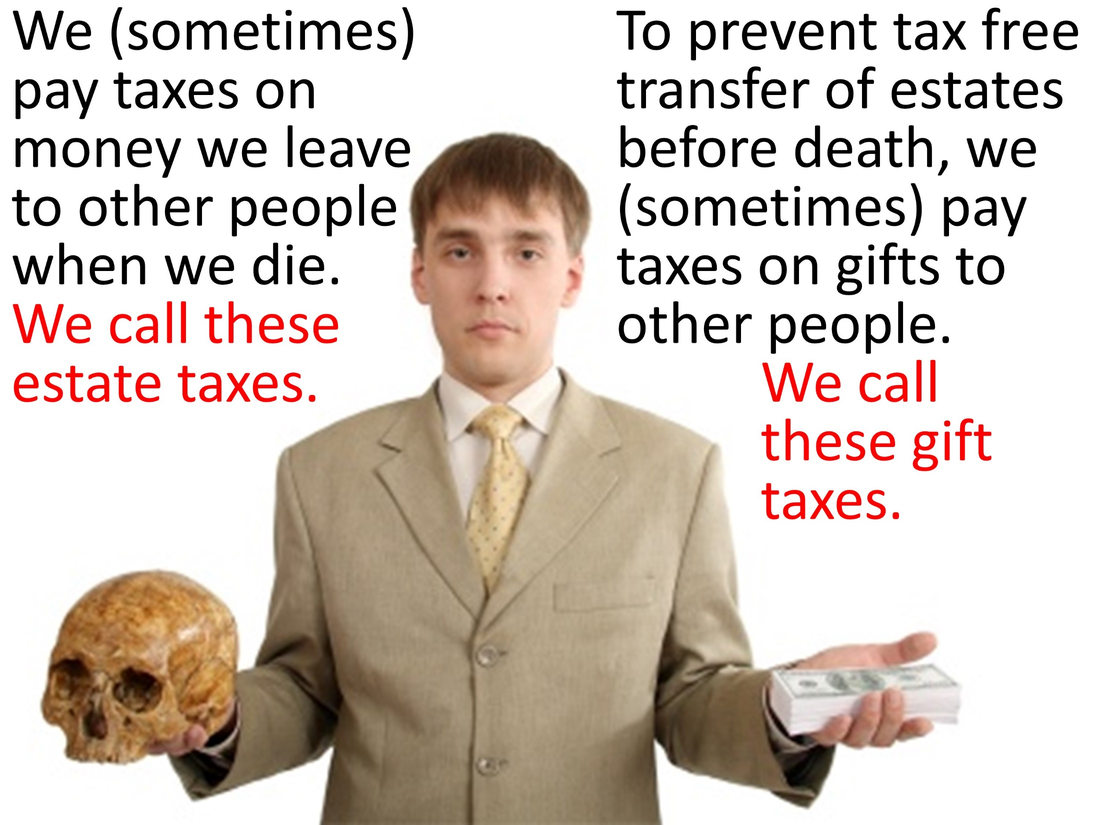
Income and capital gains taxes are not the only form of federal taxation, of course. The federal government charges taxes on the gratuitous transfer of money from one person to another, either at death (estate taxes) or during life (gift taxes).

A consistent feature of the federal tax systems is that the tax rates are not flat. As income increases, the income tax rate increases and the capital gains tax rate increases. As estate size increases, the estate tax rate increases. As total gifts to other people increases, the gift tax rate increases. These increasing tax rates mean that the tax effects from the same transaction may vary dramatically from person to person. This text will most commonly calculate the effects for a taxpayer at the highest federal tax brackets and ignore state taxes, but the actual results will differ depending upon the actual tax circumstances of the individual donor.
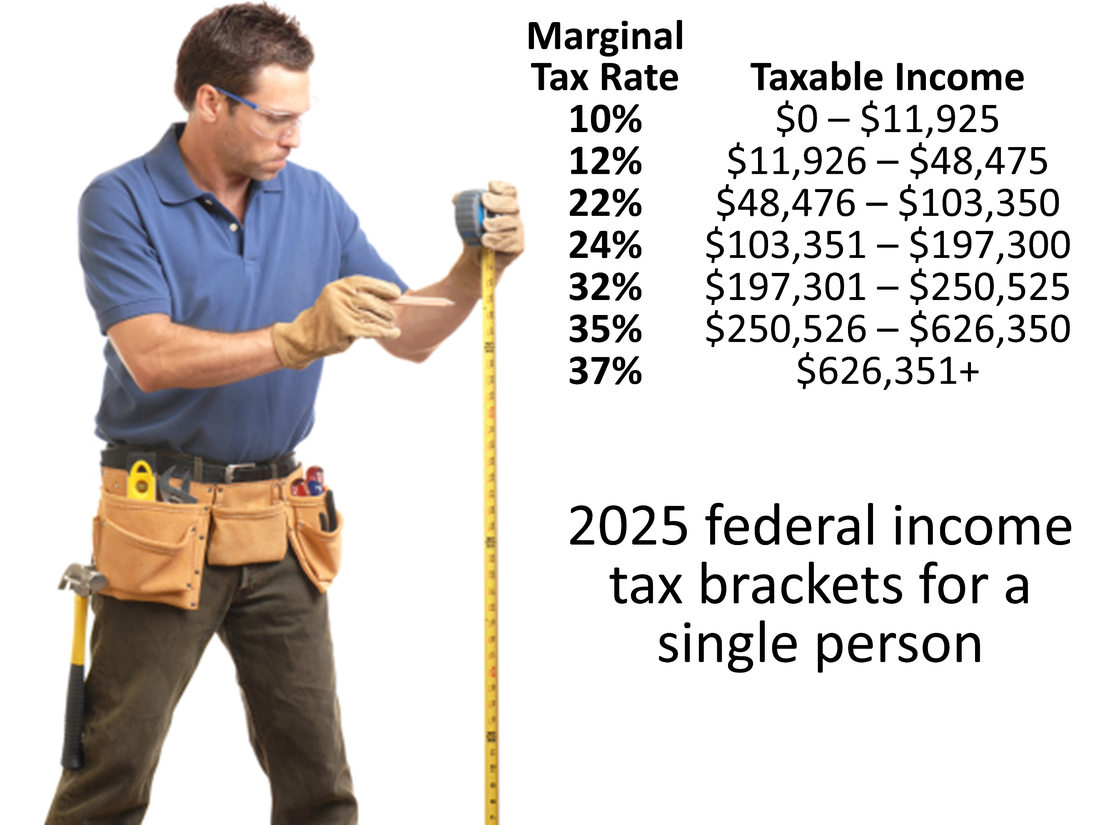
Just to illustrate this idea, the 2025 federal income tax brackets for a single person can serve as an example of increasing (a.k.a. "progressive") tax rates. As a taxpayer earns more money, he or she will tend to pay a larger share of this earned income in federal income taxes. A "marginal" tax rate refers to the rate charged on the next dollar of earned income. Calculating taxes owed is not as simple as finding the marginal tax rate and multiplying it by the taxpayer's taxable income. Instead, each separate level of income is taxed at the rate indicated in the tax table.
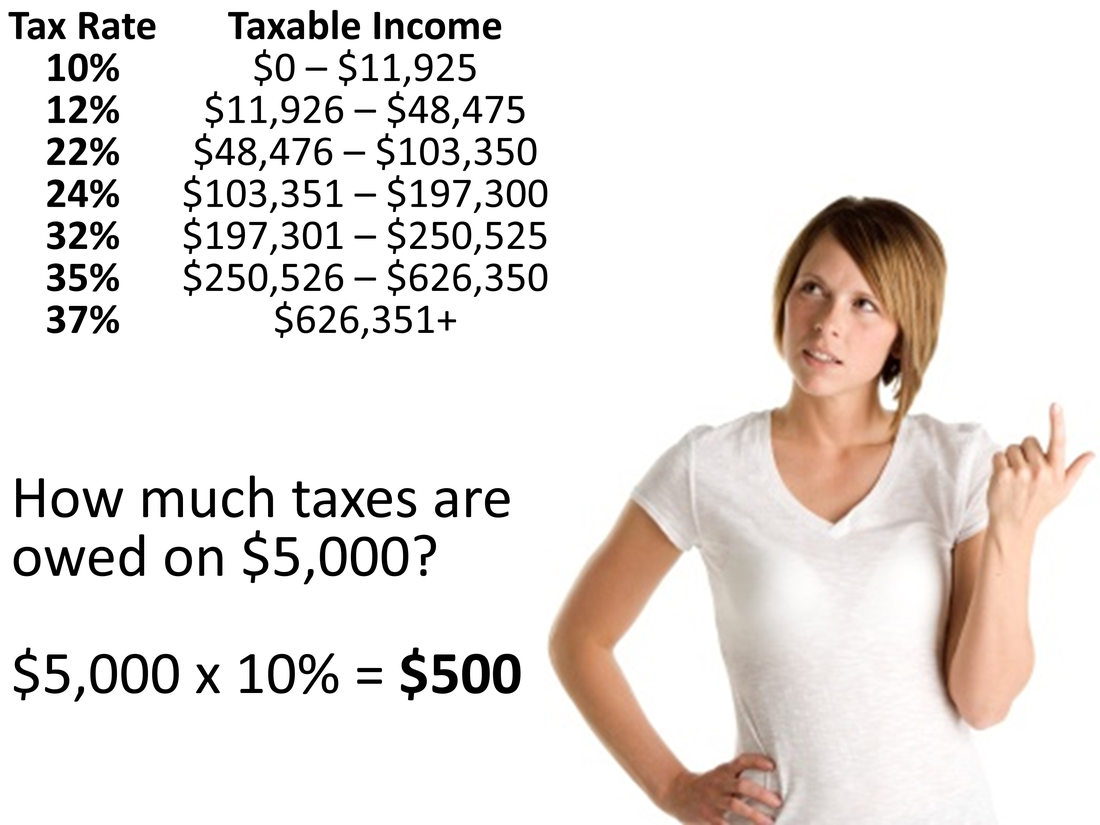
At the lowest level of taxable income, calculations only require using one rate. For example, a single taxpayer with $5,000 of taxable income in 2025 would pay taxes at the 10% rate for all of his or her taxable income. This taxpayer would owe $500 in taxes ($5,000 x 10%). However, beyond this lowest bracket of taxable income, calculating taxes owed becomes a bit more complicated.
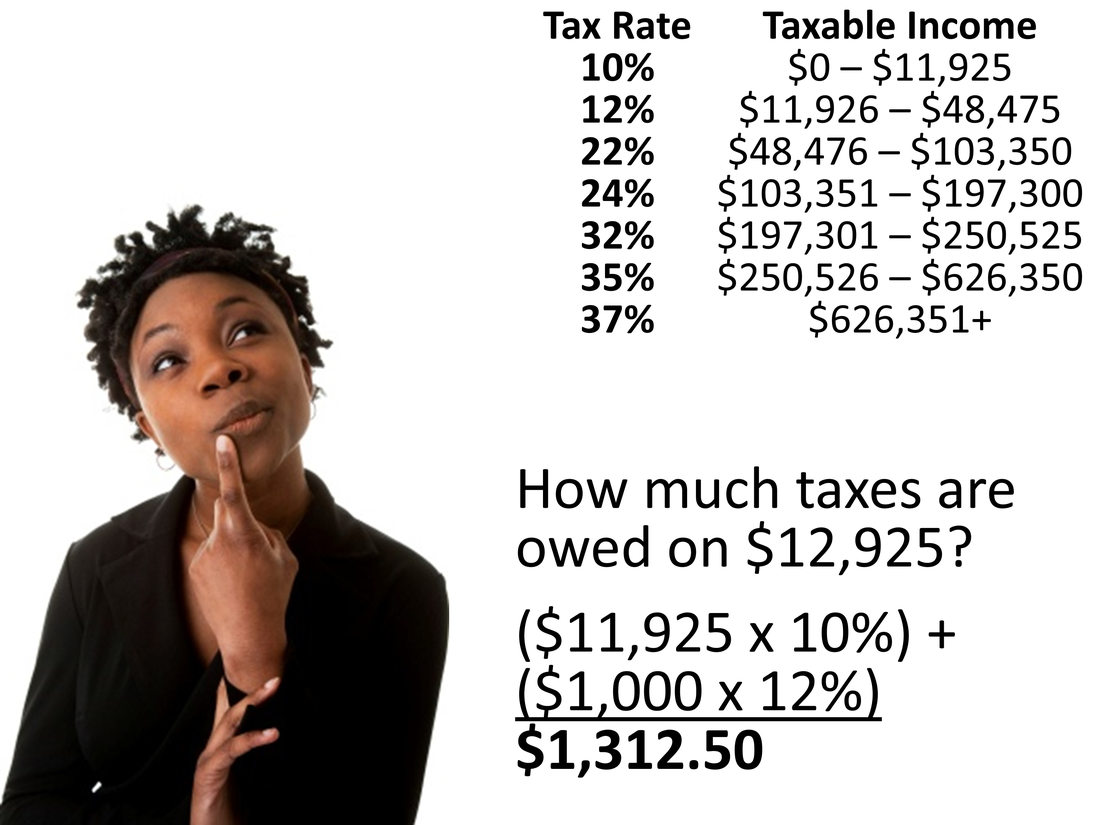
For example, if a single taxpayer had $12,925 of taxable income in 2025, then the first $11,925 would be taxed at 10%, and the remaining $1,000 would be taxed at 12%. It is incorrect to simply use the 12% rate for all of the taxpayer's taxable income. (Do not simply multiply the total $12,925 of taxable income by 12%.) The 12% rate is the marginal tax rate, because it is the rate charged for the next dollar that the taxpayer earns. But the 12% rate does not apply to every dollar the taxpayer earns.
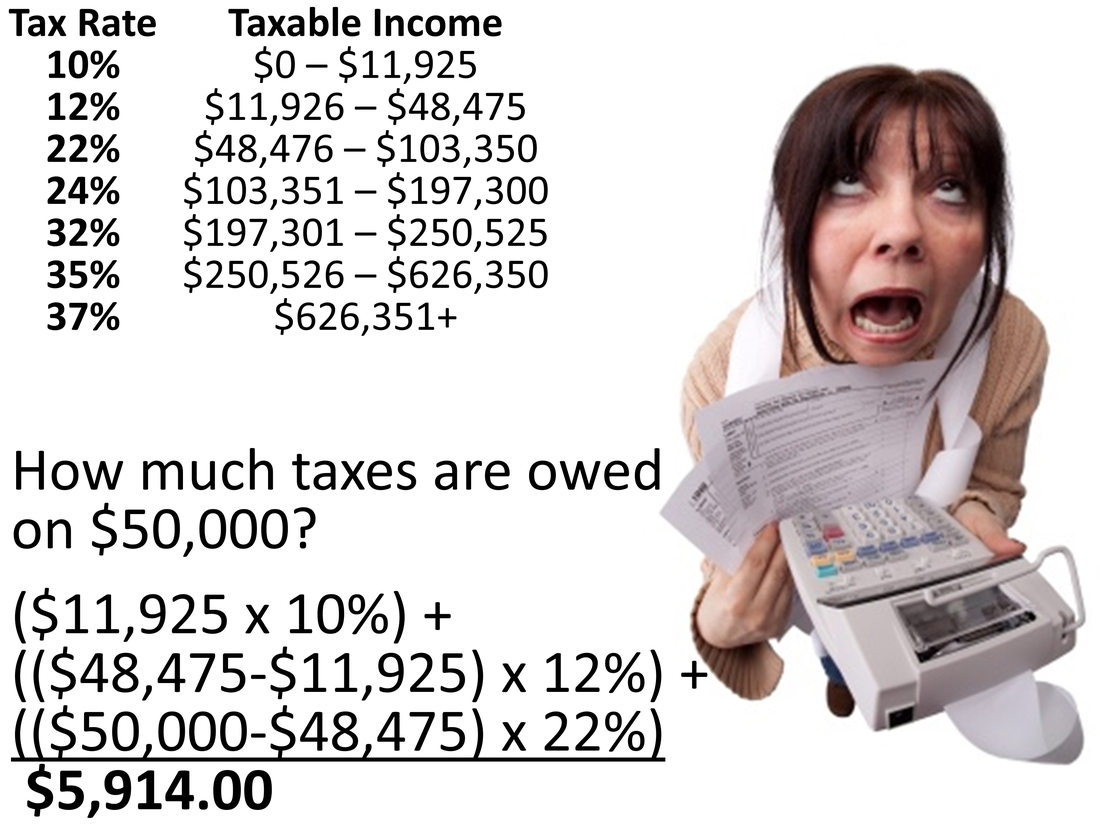
As a taxpayer earns more income and moves further up the tax brackets, calculating the income taxes owed requires more steps. For example, a single taxpayer with $50,000 of taxable income would pay a 10% rate on the first $11,925 of income earned, a 12% rate on the next $36,550 earned ($36,550 is the difference between the top of the 12% tax bracket, $48,475, and the top of the 10% tax bracket, $11,925), and a 22% rate on the final $1,525 earned ($1,525 is the amount of the $50,000 taxable income above the top of the 12% tax bracket which ends at $48,475).
Charitable gifts may generate charitable income tax deductions. Consequently, it is important to know how to calculate the effects of such deductions. An income tax deduction reduces taxable income. The value of a reduction in taxable income is the tax owed at the original taxable income less the tax owed at the reduced taxable income. Thus, understanding the value of a tax deduction (such as a charitable tax deduction) requires the ability to calculate taxes owed at various levels of taxable income, and this requires understanding how tax brackets apply to taxable income.
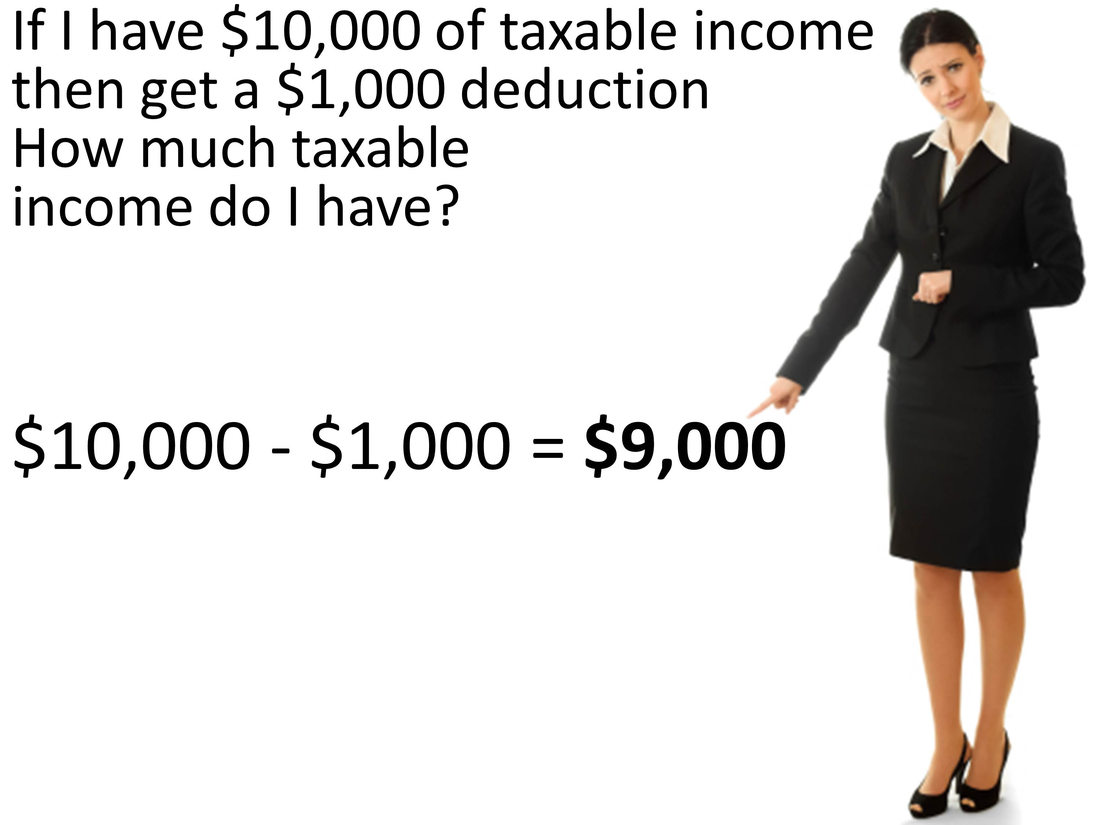
Tax deductions reduce taxable income. For example, a taxpayer with taxable income of $10,000 who then takes a $1,000 additional deduction will have $9,000 of taxable income.
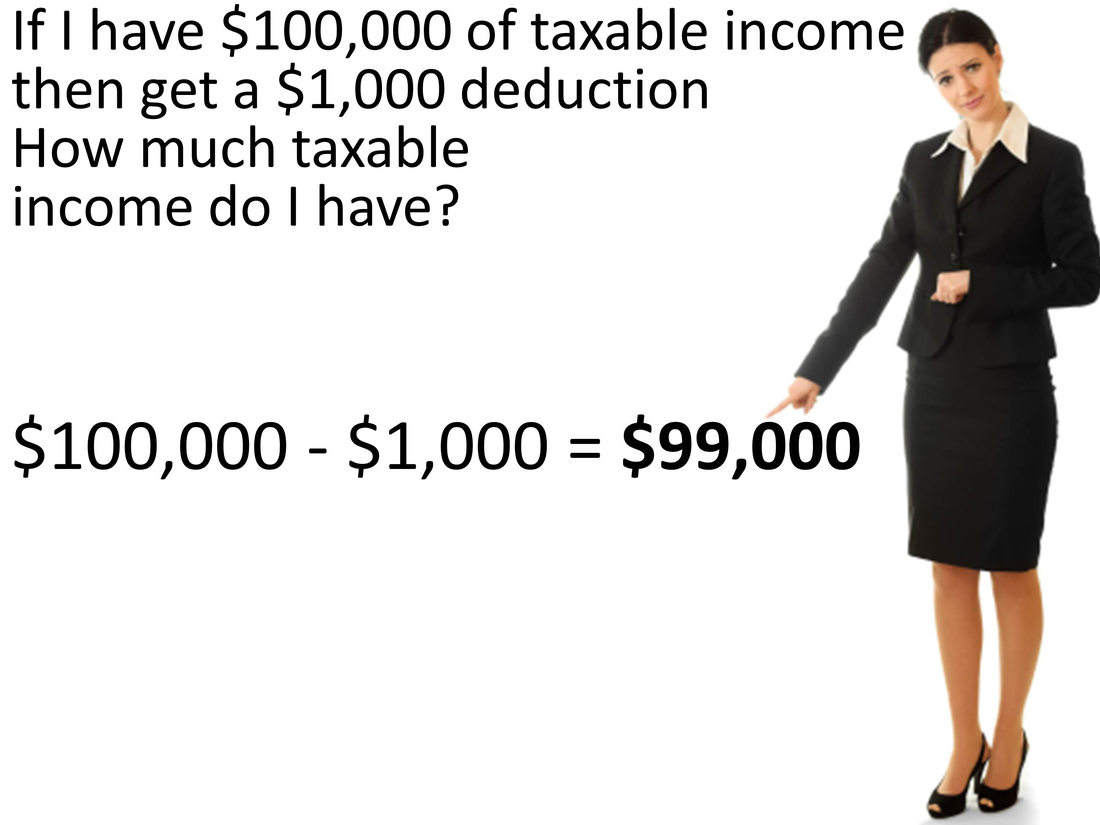
A tax deduction has the same effect on taxable income regardless of the amount of taxable income earned by the taxpayer. Whether the taxpayer's taxable income is $10,000, $100,000 or $10,000,000, an additional $1,000 deduction will reduce the taxpayer's taxable income by exactly $1,000. However, the value of the $1,000 deduction may vary greatly depending upon the taxpayer's taxable income.
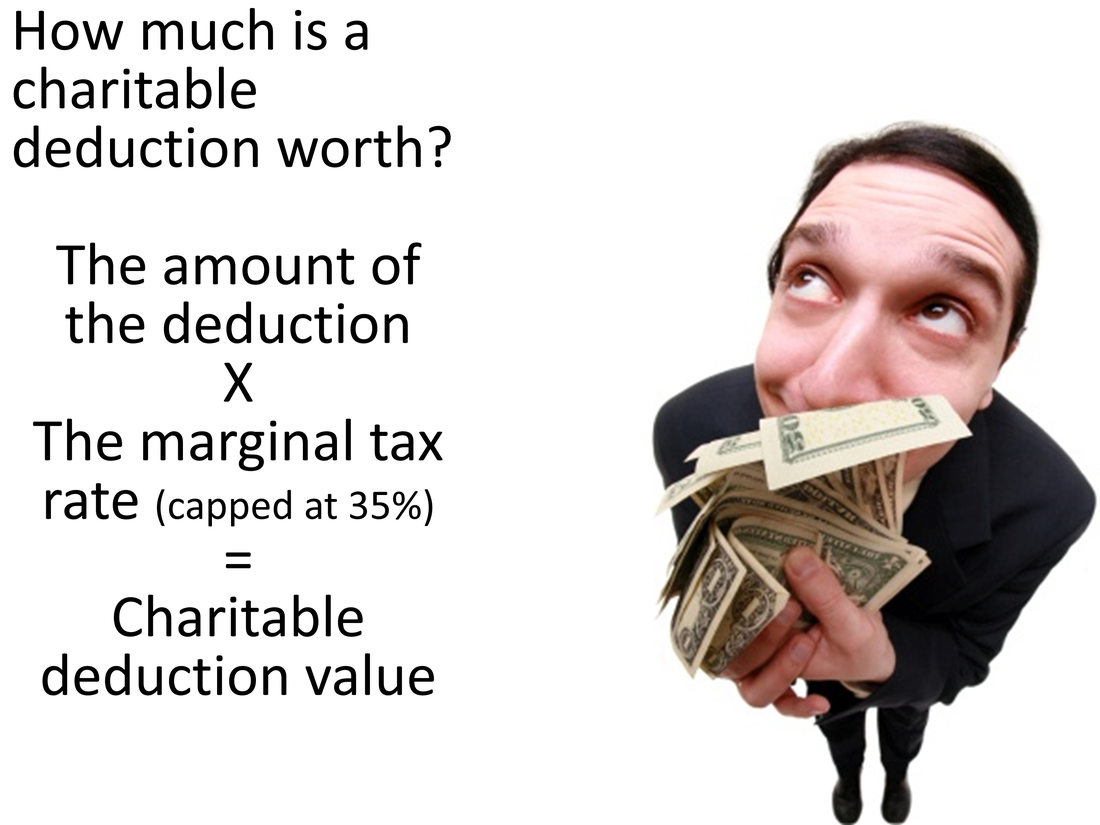
A $1,000 deduction is not worth $1,000. The deduction reduces taxable income by $1,000, but its value depends on the taxpayer's tax rate. A $1,000 reduction in taxable income is worth different amounts at different income levels. Often the value of the tax deduction is the amount of the tax deduction multiplied by the taxpayer's highest tax bracket. So, a $1,000 deduction is worth $100 to a taxpayer in the 10% tax bracket. But charitable deductions are capped at a 35% value. So, a $1,000 charitable deduction is worth $350 to a taxpayer in either the 35% or 37% tax bracket. This higher value explains why those with higher incomes may be more interested in charitable tax deductions.
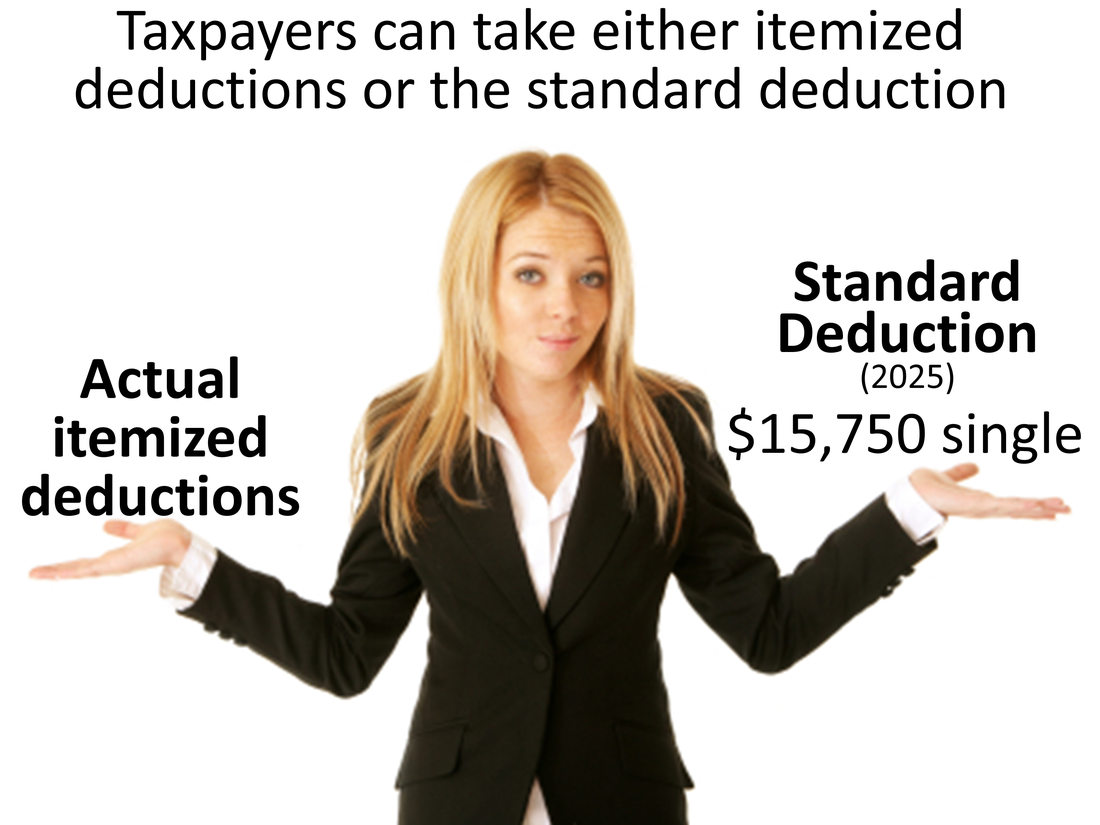
Charitable income tax deductions are an itemized income tax deduction. Other examples of itemized income tax deductions include the mortgage interest deduction, deductions for medical expenses greater than a set percentage of adjusted gross income, and deductions for state and local taxes. In order to use itemized deductions, a taxpayer must give up the standard deduction. So, a taxpayer who takes the standard deduction cannot use any charitable income tax deductions.
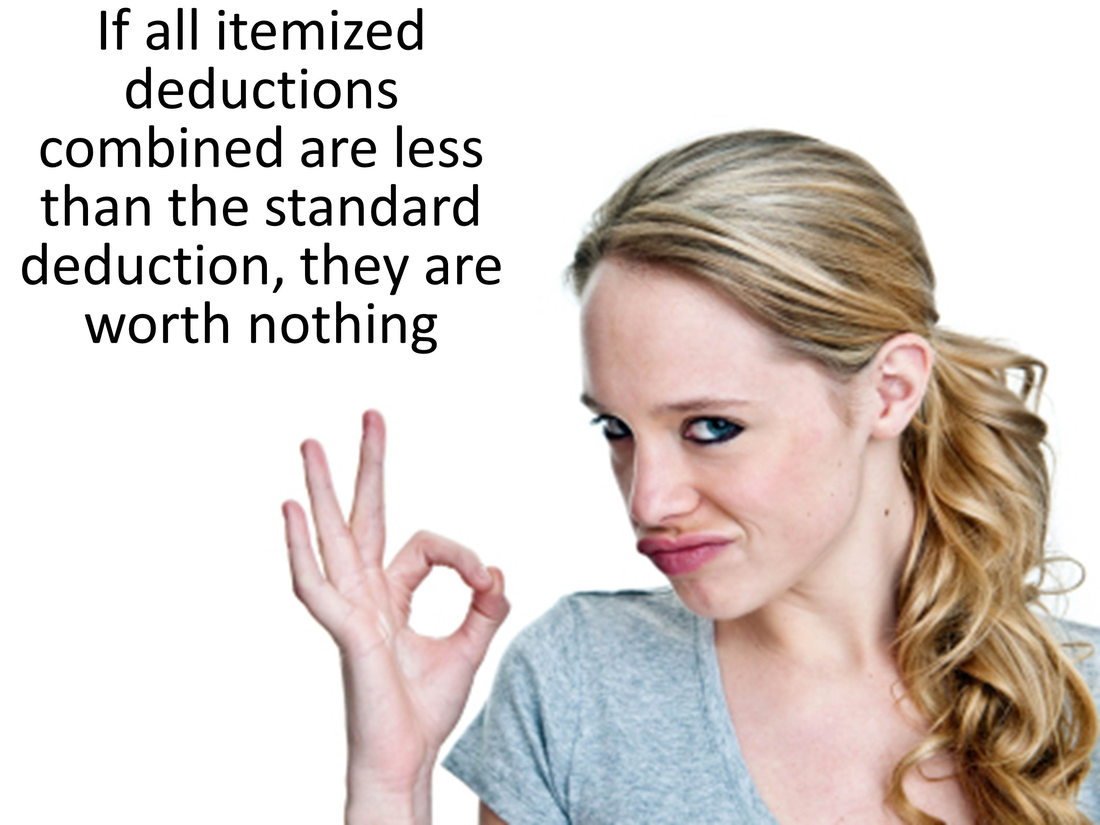
An itemized tax deduction - like a charitable deduction - might be worth nothing. Consider the example of a single donor who made $5,000 of deductible charitable gifts in 2025 but had no other itemized deductions. This donor would face the choice of using either $5,000 of itemized deductions or using the $15,750 standard deduction. Obviously, the donor would be better off taking the standard deduction. Consequently, the $5,000 charitable income tax deduction has no value to this donor. (In 2026 and later, they could deduct the first $1,000 if they took the standard deduction, but charitable deductions beyond this have no value.)
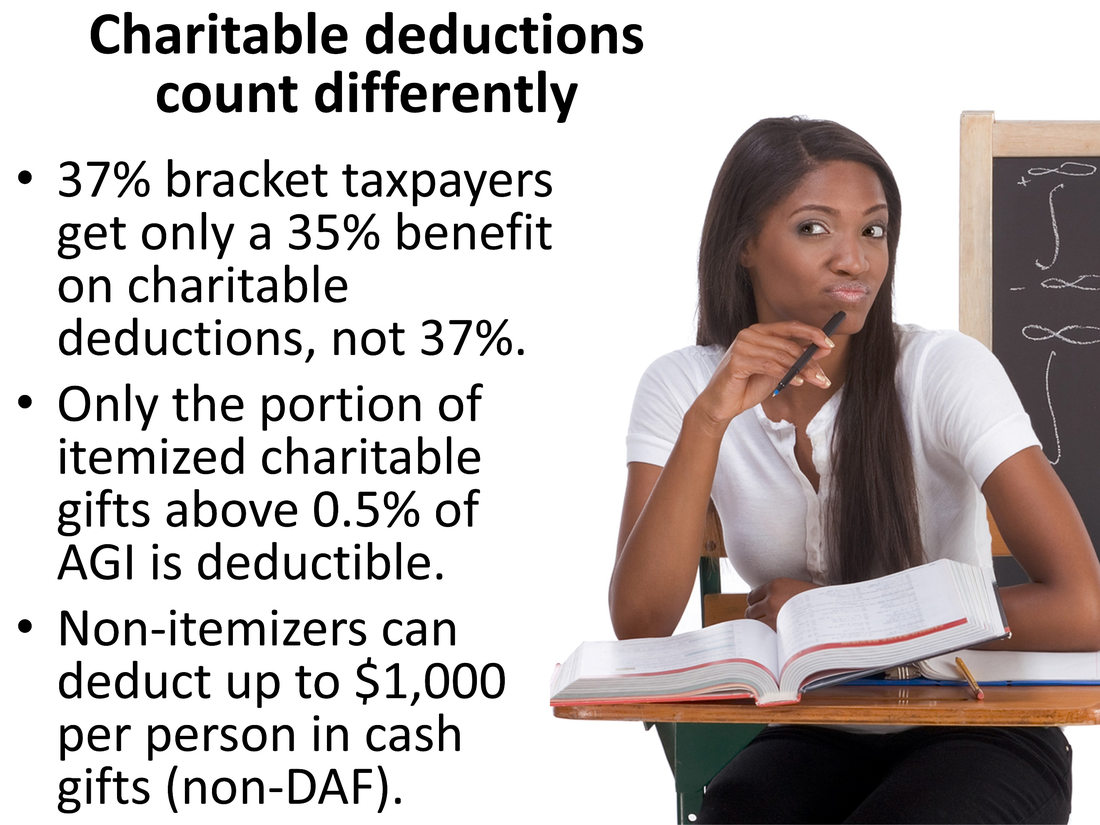
Charitable deductions are treated differently than other itemized deductions. Normally, deductions are worth 37 cents per dollar to a taxpayer in the 37% tax bracket, but charitable deductions are limited to a 35% benefit. Normally, deductions count from the first dollar, but charitable deductions don't start counting until after they surpass 0.5% of the donor's adjusted gross income. Normally, non-itemizers can't take deductions, but they can take up to $1,000 of deductions for gifts of cash to public charities (excluding Donor Advised Funds).
These special rules for charitable deductions are important to remember, but to keep our calculations simple for the remainder of the text, all examples will assume that 1) The donors are already itemizing due to other deductions and 2) The donors have already donated 0.5% of their AGI in other gifting.
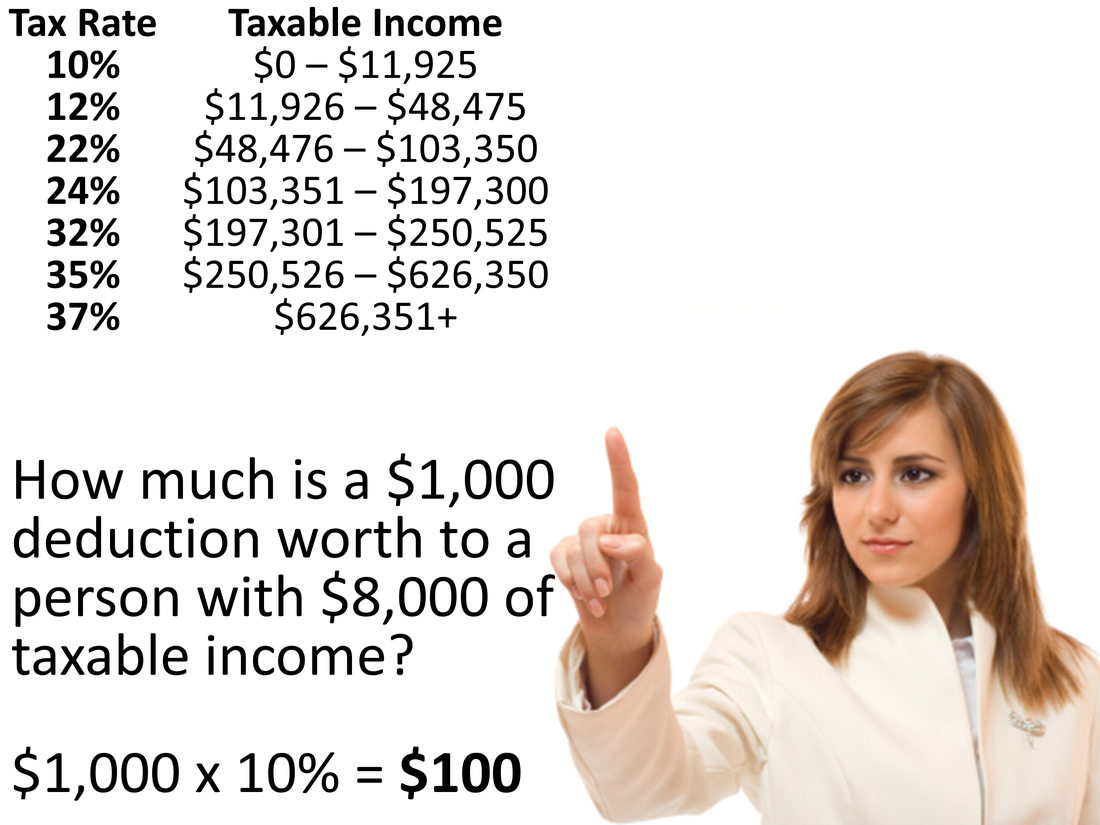
As mentioned previously, the value of a tax deduction depends upon the tax rate of the taxpayer. For example, a single taxpayer with $8,000 of taxable income in 2025 would pay $800 in taxes. If the taxpayer were to have received an additional $1,000 deduction, his or her taxable income would have fallen to $7,000 and he or she would have owed $700 in taxes. Thus, the $1,000 deduction would have caused the taxpayer's tax bill to drop by $100.
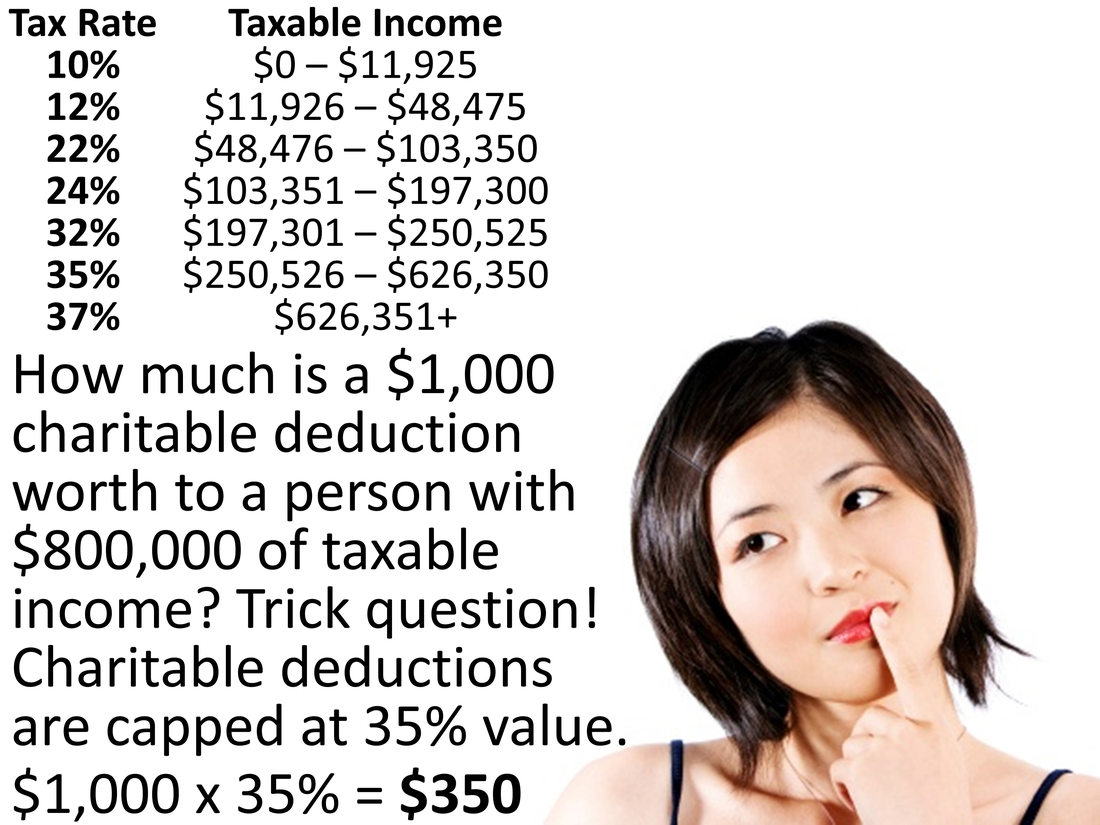
The same tax deduction is worth more to a higher income taxpayer. For example, a single taxpayer with $800,000 of taxable income in 2025 would pay $253,020 in taxes. If the taxpayer were to have received an additional $1,000 deduction, his or her taxable income would have fallen to $799,000 and he or she would normally have owed $252,650 in taxes. Thus, the $1,000 deduction would normally have caused the taxpayer's tax bill to drop by $370. However, in 2026 and beyond, charitable deductions are capped at 35% as the maximum value. Because this is a charitable deduction, the taxpayer's bill would then drop by only $350 (to $252,670).
In the prior two cases, the quick way to calculate the value of the deduction would have been to simply multiply the deduction by the taxpayer's marginal tax rate (e.g., $1,000 x 10% marginal tax rate = $100 in the first example). Or, for the 37% rate this means swapping the 37% marginal tax for the 35% maximum charitable deduction value leading to $1,000 x 35% = $350 in the second example.
However, this simple approach does not work if the deduction causes the taxpayer's marginal tax rate to change (other than moving from the 37% to 35% rate which makes no difference in 2026 and later). In that case, part of the deduction will be valued at the higher tax rate and part will be valued at the lower tax rate.
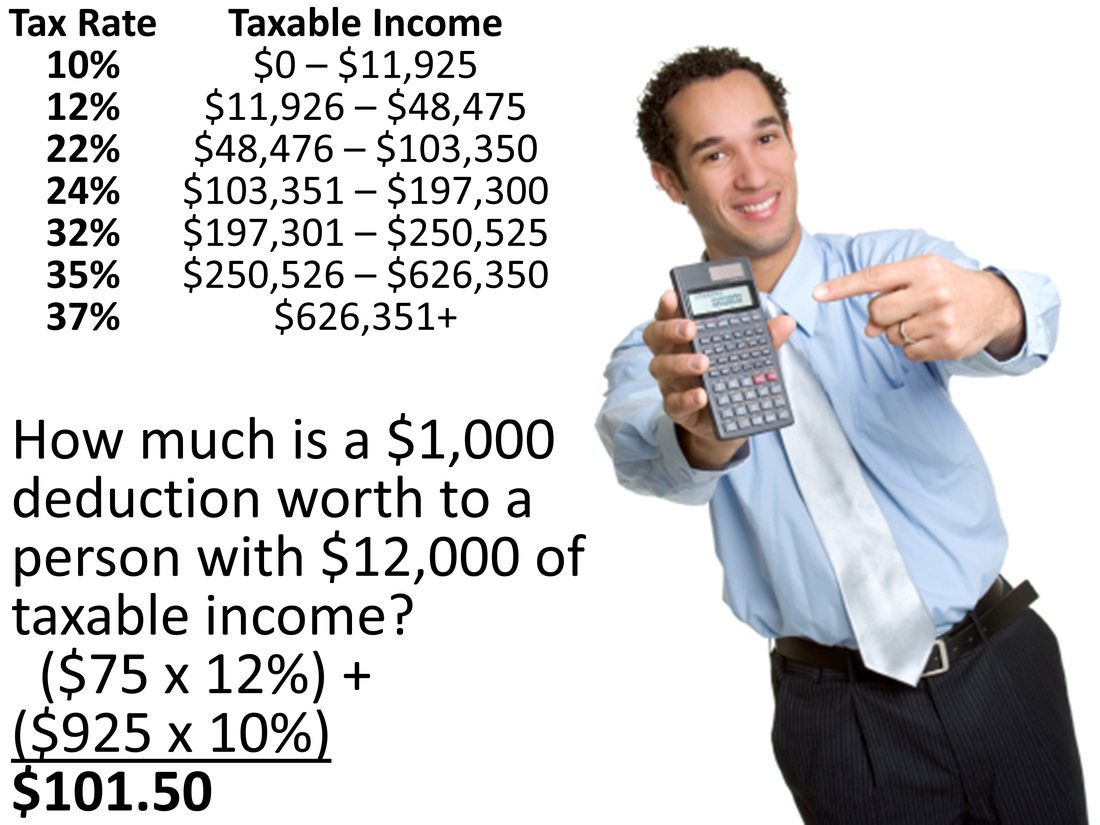
As an example, consider the value of a $1,000 deduction to a single taxpayer with $12,000 of taxable income in 2025. The taxpayer begins at the 12% marginal tax rate. However, after applying the first $75 of the deduction, the taxpayer now has $11,925 of taxable income and drops into the lower tax bracket. Thus, any further deductions will reduce taxation not at the original 12% rate, but at the lower 10% rate. The first $75 of the deduction reduces taxes at a 12% rate, and the final $925 of the deduction reduces taxes at a 10% rate. The value of the deduction is thus, ($75 x 12%) + ($925 x 10%) = $101.50.
Put another way, a single taxpayer with $12,000 of taxable income in 2025 would pay $1,201.50 in taxes. If the taxpayer were to have received an additional $1,000 deduction, his or her taxable income would have fallen to $11,000 and he or she would have owed $1,100 in taxes. Thus, the $1,000 deduction would have caused the taxpayer's tax bill to drop by $101.50.

A separate set of tax rates applies to capital gains. A capital gain occurs when a taxpayer sells an investment for more than he or she paid for it (including the cost of improvements). This profit - the difference between the sale price and purchase price - is the amount of the capital gain.
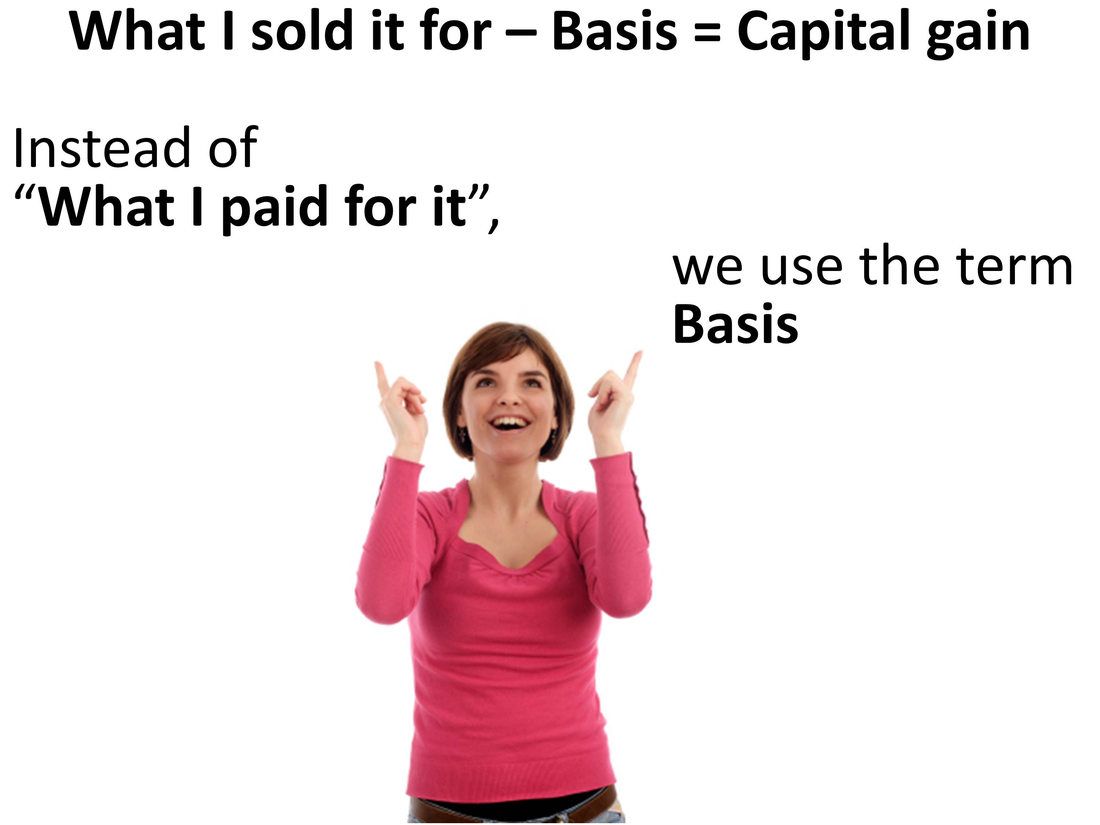
Capital gain is calculated as the sales price less the taxpayer's "basis" (or "adjusted basis") in the property. In most circumstances, the basis is simply the amount that the taxpayer paid for the investment. However, basis is not always identical with the original price.
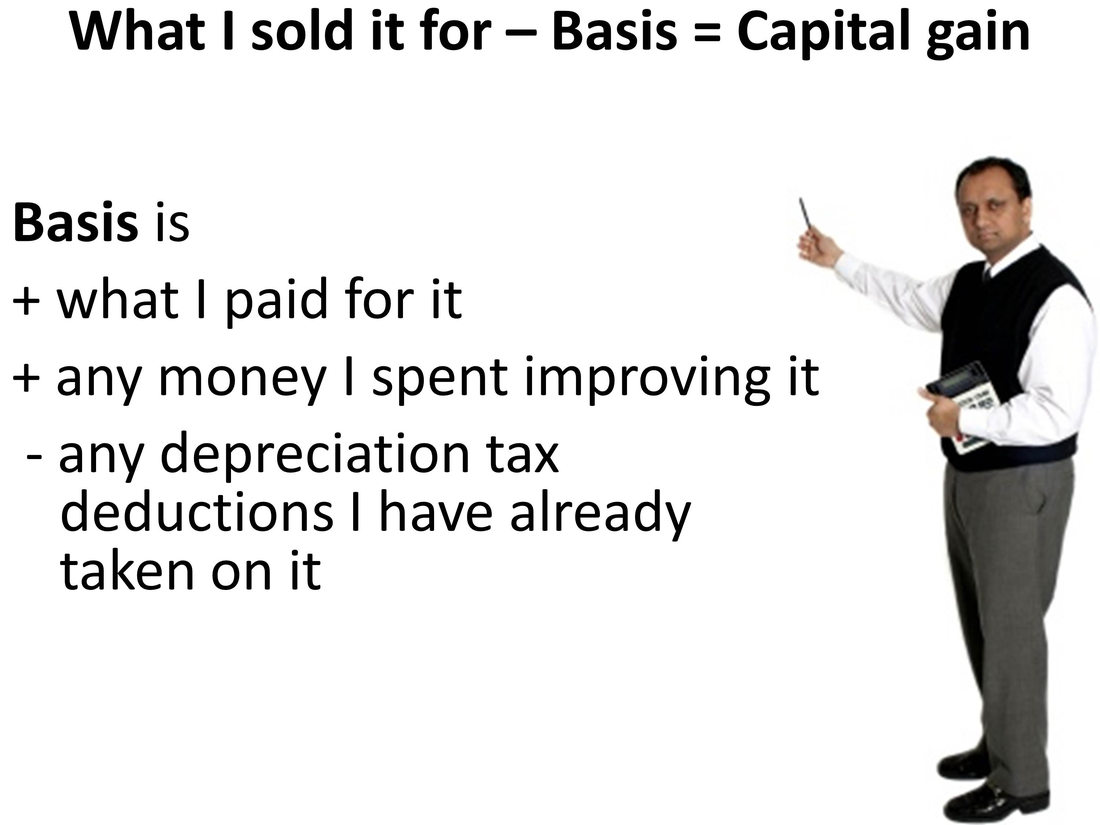
Basis always starts as the amount paid for the investment, but it can be adjusted later. For example, if an investor purchases an apartment building for $1,000,000 and then spends $250,000 making capital improvements and additions to the building, the investor's basis would increase to $1,250,000 (the $100,000,000 original purchase price plus the $250,000 of improvements). This makes sense intuitively because in order to get the new, improved building the investor had to spend a total of $1,250,000.
Less intuitive is the effect of depreciation tax deductions. The investor who purchased the apartment building is allowed to assume for tax purposes that the building is slowly wearing out (i.e., depreciating). Each year, the taxpayer is allowed to claim this wearing out process (depreciation) as a loss, offsetting gains or income from certain other sources. These depreciation deductions reduce the taxpayer's basis in the property. (If this were not the case, the taxpayer would be able to deduct the same dollar twice, first as a depreciation deduction and later as a reduction of the capital gain.) Depreciation deductions do not apply to financial instruments such as stocks or bonds or to raw land. Consequently, this text will not address depreciation unless the transaction specifically involves a gift of developed real estate.
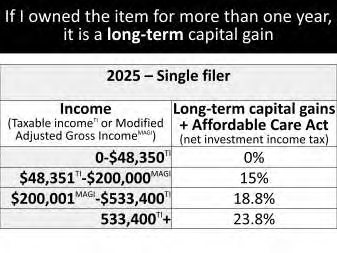
If the taxpayer owns the investment for more than one year, any gain is taxed as a long-term capital gain. Long-term capital gains tax rates are lower than those for ordinary income or short-term capital gains. The capital gains tax rates are 0%, 15%, and 20%. The Affordable Care Act imposes an additional 3.8% tax on net investment income of taxpayers over certain income thresholds (e.g., $200,000 of modified adjusted gross income for a single individual, $250,000 for a married couple filing jointly, not indexed for inflation). Net investment income includes capital gains as well as other types of investment income such as interest, dividends, rent, and royalty income. Consequently, depending upon the taxpayer's taxable income and modified adjusted gross income, capital gains are taxed at 0%, 15%, 18.8%, or 23.8%.
[These rates do not depend only upon the amount of capital gain income but rather depend upon the amount of overall taxable income and modified adjusted gross income. Consequently, all of the taxpayer's capital gains for a particular year will be taxed at the same rate unless the capital gain itself pushes the taxpayer into a higher overall income category for calculating the capital gain tax rates - otherwise there is no run up the rate schedule where some gains are taxed at 0%, then some at 15%, and so forth.]

Although a charitable income tax deduction is a common tax benefit of charitable transactions, it's not the only tax benefit. Other tax benefits come not through deductions but by avoiding (or postponing) recognition of income in the first place. Donating an appreciated asset to charity means that no capital gains tax is paid on the appreciation. Money in a traditional IRA or IRA rollover has been earned but never taxed. When it is transferred directly to a charity through a QCD (Qualified Charitable Distribution) or a transfer-on-death beneficiary designation, no incomes taxes will ever be paid. Such tax avoidance is available even for donors who use the standard deduction.

Finally, as described previously, the federal government charges taxes on gifts from one person to another, either at death (estate taxes) or during life (gift taxes). Transfers to charitable organizations are not taxable. Thus, any part of the estate that is transferred to a charity will not generate estate taxes. Similarly, any gifts made during life to charity will not generate gift taxes. This simple reality can be leveraged to create substantial estate tax planning opportunities through the use of trusts such as a Charitable Remainder Trust or non-grantor Charitable Lead Trust.

Most people are not affected by estate and gift taxes because the exemption levels are quite high. For example, in 2026 there is no tax on estate and gift transfers that, when combined, do not exceed $15,000,000 for a single taxpayer or $30,000,000 for a married couple. Thus, estate tax and gift tax planning is now limited to the realm of the wealthy. However, estate planning can also affect other taxes, such as capital gains and income taxes, which are not limited to the wealthy. Thus, tax planning in estates can still be quite important even where estate taxes are not relevant.
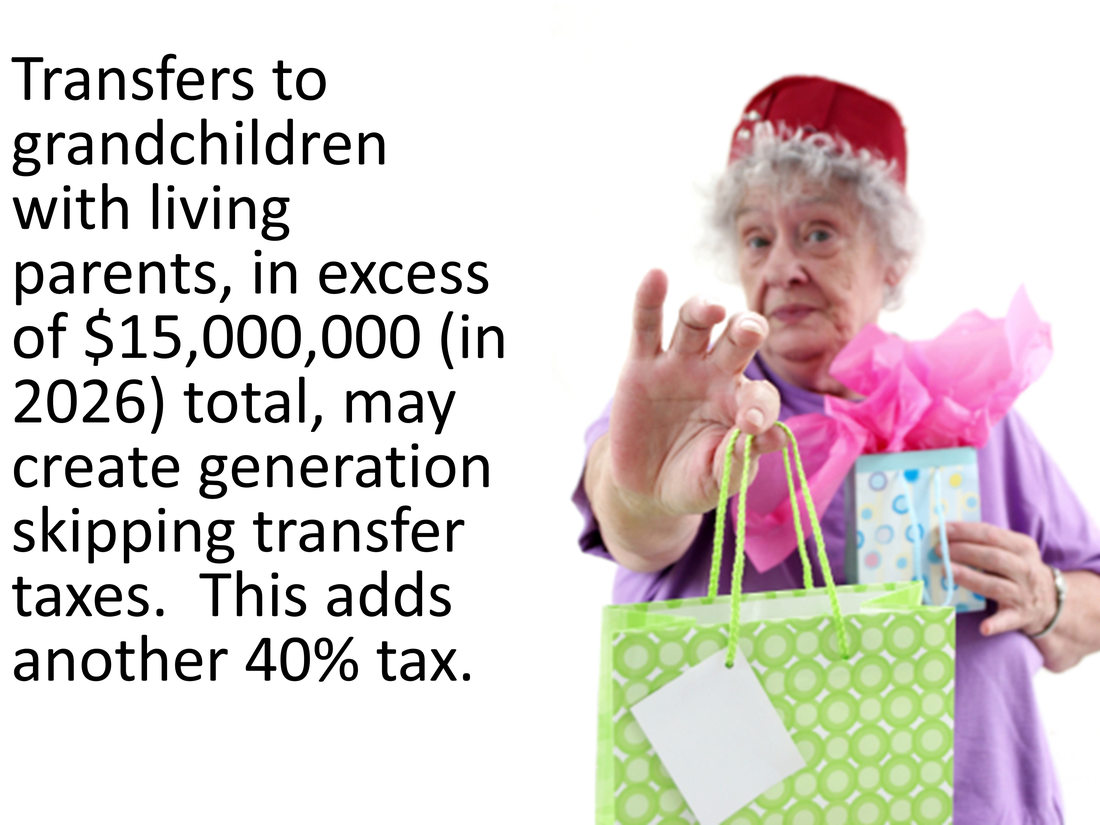
An additional tax, referred to as the generation skipping transfer tax, can arise if the taxpayer makes transfers that "skip" a generation. For example, if a grandparent makes a gift (either during life or at death) to the child of his or her living child, this transfer skips a generation. The amount of these generation skipping transfers that, when combined, exceeds the exemption equivalent amount ($30,000,000 in 2026), will generate an additional 40% tax. This 40% generation skipping transfer tax is applied to the amount remaining after application of the 40% estate and gift tax. As with the estate tax, because of the high exemption amounts, these generation skipping transfer tax issues are a concern only for those taxpayers transferring substantial wealth. However, when they apply, the combined impact of these taxes can be dramatic.
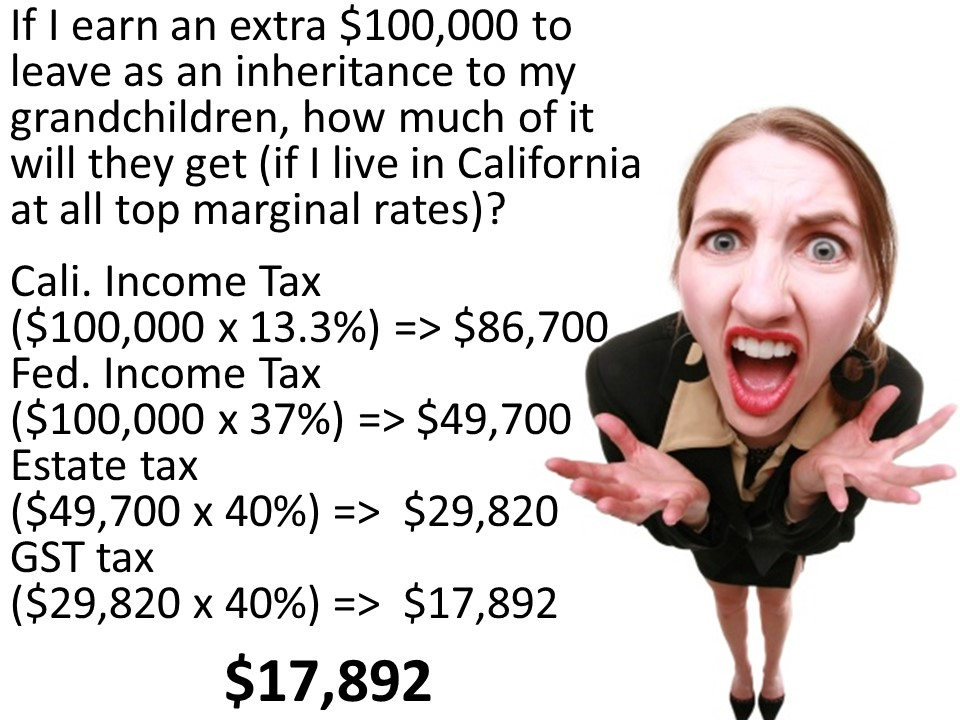
As an extreme example of how burdensome the various types of taxation can become, consider the case of a taxpayer who wishes to earn an additional $100,000 to leave as an inheritance to his or her grandchildren. If this person were living in the state of California and at all of the top marginal tax rates (e.g., in 2026 having income over $1,000,000 and having previously made over $15,000,000 of generation-skipping gifts), the tax consequences would be severe. The additional $100,000 of income would first be subject to California's 13.3% state income tax, costing $13,300. In addition, it would be subject to the 37% federal income tax (with no additional federal deductions for the increased state taxes due to the cap on these deductions), generating a tax bill of $37,000. After paying the federal income tax, the remaining $49,700 could then be available to be inherited by the grandchildren. This transfer at death would generate a 40% estate tax costing $19,880 and leaving $29,820. However, if the grandchildren's parents were still alive, this estate transfer would skip a generation and thus be subject to the generation skipping transfer tax. This generation skipping transfer tax would generate an additional 40% tax on the remaining $29,820 costing $11,928 and leaving $17,892 for the grandchildren. Although certainly not commonplace, this extreme example shows just how important tax planning can be in the face of such potentially extreme tax consequences. As taxation increases, the value of tax planning - including charitable tax planning - also increases. Consequently, charitably inclined individuals facing significant tax burdens are often excellent candidates for sophisticated charitable planning.