Story review
A story progresses through
Backstory and setting
These establish motivation from the main character’s original identity.
The inciting incident
This is the main character’s challenge.
Climax and resolution
These show the main character’s victory and altered identity.
Effective fundraising story hinges on the donor’s action – the gift. Thus, the donor is a main character. The donor’s story can progress through these same story steps.
Donor story: Inciting incident
The donor will face a challenge. This challenge is the donation request. In an effective fundraising story, the challenge must connect to a victory.
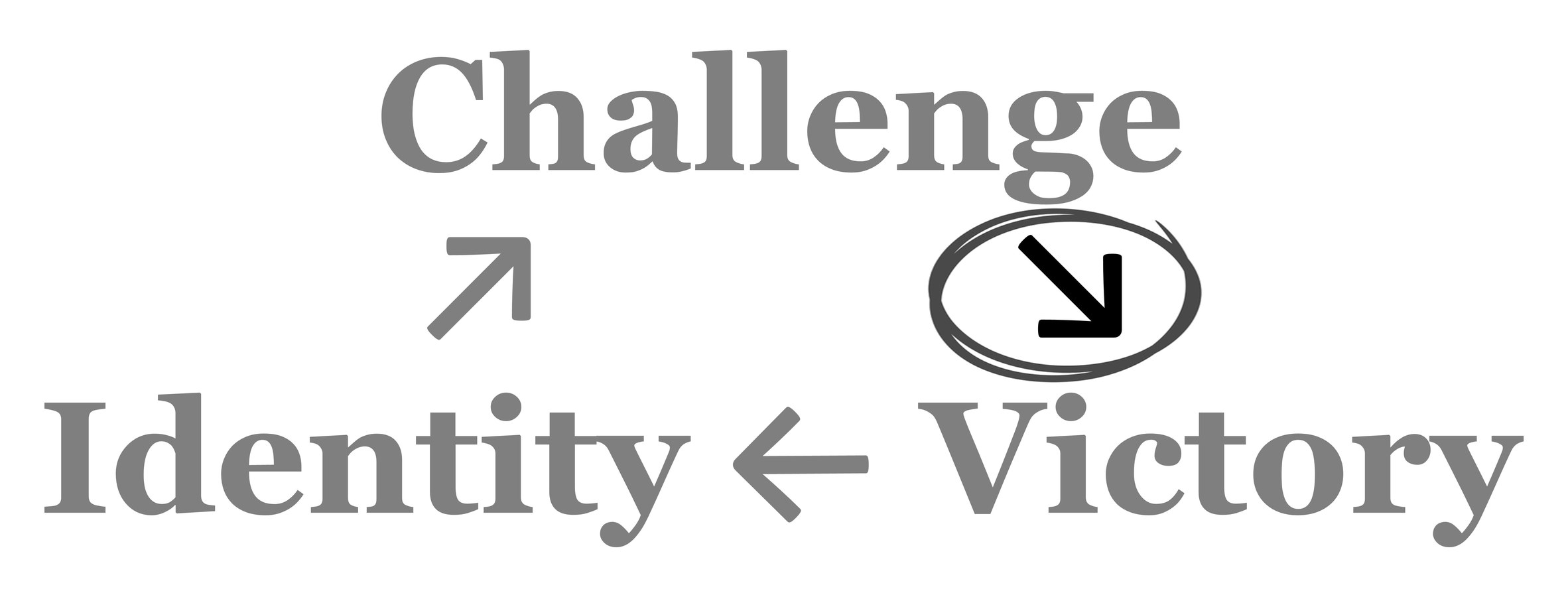
A compelling ask promises the hope of a compelling victory. A compelling victory is specific and visualizable. This says something about the victory. But it also says something about the challenge. Connecting to a specific victory requires a specific challenge.
Vague or missing challenge
A vague or uncertain challenge is hard to connect to a specific victory. It’s hard to connect to a clear-cut, compelling, visualizable outcome. The fundraising story cycle breaks down. The challenge becomes fuzzy.
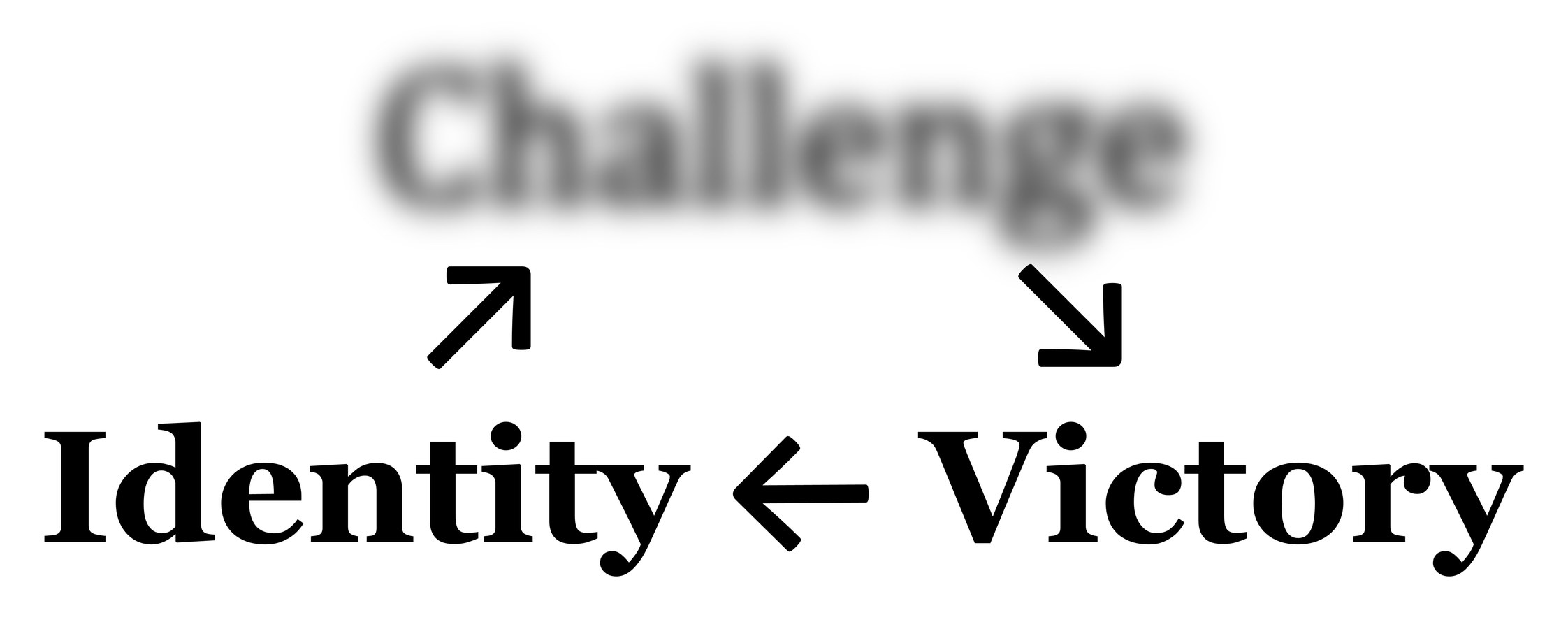
Or worse yet, the charity never actually makes the ask. It just does good work. It hopes that people will automatically donate. That story cycle has no challenge.

The inciting incident must be clear and simple
Story requires an inciting incident. The inciting incident presents a challenge. In good story, this challenge is clear and simple.
Consider the highest-grossing movie franchises. In The Matrix, the choice is simple. Take the red pill or the blue pill. In The Hobbit, it’s also simple. Go on an adventure or stay in the shire. In the original Star Wars, the choice is similar. Stay on the farm or go to Alderaan to help the princess.
These challenges aren’t vague. These aren’t challenges to, “Please do whatever you can.” They are simple and specific. They are either yes or no.
The fundraising challenge must be clear and simple
In fundraising story, the simplest challenge is to ask for a specific amount. This is a yes or no question. A specific amount can link to a specific victory. This makes the rest of the story clear and simple.
A specific ask for a specific amount works. But for the fundraiser, it can be scary. What if you guess wrong? What if the amount is too high – or worse, too low?325 What if the project was the wrong project for this donor? Getting it right requires a lot of information. Sometimes, that just isn’t feasible.
What then? Fortunately, there is another answer. You’ll find it at any restaurant.
Menus can be clear and simple
Suppose you visit a new restaurant. Instead of handing you a menu, the waiter says,
“We cook good food. So, just give us some money. Then we’ll go figure out something to cook.”
This would be strange. But it’s a bit like some charities’ approach to fundraising. Their message is,
“We do good work. We need money. So, people should give us some. Then we’ll do something good with it.”
This doesn’t work in restaurants. And it doesn’t work in fundraising. It’s a vague request with a vague result.
What can help is a menu. A menu provides simple and specific options. It gives simple and specific prices. This can make the decision easier.
Research: Menus of causes and projects
In research experiments, menus can sometimes help. In one, some people could give to any charity. Others had to choose from a list of only five charities.326 With only five options, the share of people giving more than doubled.
Menus simplify the choice. They avoid analysis paralysis.327 But even menus can get too complicated.
One experiment asked people to volunteer at a charity. Increasing the number of charity options from 10 to 30 actually reduced volunteering.328 Another found that giving increased when people could choose from 8 charities rather than only 3. But increasing from 8 to 16 charities didn’t help.329
Another used just one charity: UNICEF. But donors had to pick a project. People had 1, 7, or 13 project options.330 Giving was lower with just 1 or all 13 options.331
Having some options helps. Having too many options hurts.
Research: Menus of gift amounts
Menus can also help with suggesting a gift amount. One experiment used 120,000 appeal letters for a cancer charity.332 Some letters included suggested gift amounts. Others didn’t. Those with suggested amounts raised more money.
A menu can also help with another fundraising issue: asking too small. A menu helps by showing other levels. If we’ve guessed wrong on the amount, other options are nearby. Recommending the hamburger? Okay, but the filet mignon is still right next to it on the menu.
Asking for $50,000 to run a program for a year can work. But why not put it on a menu? It can go beside the option of $1 million to permanently endow the program.333 Listing charitable gift annuity rates is fine. But showing options with lower rates creating bigger donations is smarter.
Even the classic campaign donation pyramid is a menu. Requesting a gift from the pyramid
Makes a specific ask
Shows that many others are also giving (and giving even more), and
Keeps the larger gifts “on the menu.”
Research: Menus with large amounts
One experiment tested the effects of including a larger option.334 The experiment used 60,000 fundraising appeal letters from a hospital. The standard letter followed the charity’s normal practice. The response card used the three most common gift amounts:
$10 $50 $100 $___
An alternative version added higher amounts:
$10 $50 $100 $250 $500 $___
The second version raised twice as much money per letter. But another, relatively strange, version worked just as well. This had suggested amounts of only
$10 $500 $___
In both cases, including the higher amount worked better. But this is not the same as increasing all of the options. Increasing the smallest option has a downside. It makes a smaller gift seem unacceptable. This can reduce the share of people who give at all. Experimental results confirm this. One study with 10,000 public TV station members found,
“in three independent comparisons, increasing the entire vector of suggested amounts by 20%–40% reduces the probability of giving by approximately 15%.”335
Research: Simple works
Menus provide simple options. This makes the decision easier.
One experiment found a way to interfere with this. People prefer to give round numbers. Removing this option frustrates simplicity. Replacing $100 with $95 causes people to avoid this option. A direct mail experiment changed the suggested amounts from,
$35 $50 $75 $100 $250 $___
to
$35 $50 $75 $95 $250 $___
The result? People avoided the unusual option. The researchers explained,
“changing one of the suggested amounts in an ask string from $100 to $95 reduces the number of gifts greater than or equal to $90 by more than 30%.”336
Menus work because they make the response simple. Of course, requesting one amount is simpler still. One experiment asked for small gifts for nature conservation. This was at the end of a tourist experience.337 The share of people agreeing to give was
20% with a blank amount
35% with three suggested amounts and a blank amount
48% with only one amount, using the previous version’s middle suggestion, and
55% with only one amount, using the previous version’s lowest suggestion.
The open-ended request was the worst. A menu worked better. A specific amount worked the best. But the specific amount had a trade-off. Asking for more increased the chance for a “no.”
“Tricks and traps,” or delivering value?
It’s fun to learn the tricks that bump up giving responses. It’s fine to focus on making the perfect ask. But the story can’t end at the ask. If it does, donors might still give. But they’ll only do it once.
After all the tricks, the donor experience was either worth the gift or it wasn’t. And if we look at how real donors behave in the real world, mostly it wasn’t. Donors test many charities. Most fail the test. Over 70% of first-time donors to a charity never give to that charity again.338
Conclusion
The right environment or framing can help. It can improve the challenge. It can make it more compelling. But if
Challenge ↛ Victory
The challenge doesn’t ultimately lead to a victory, or
Victory ↛ Identity
The victory doesn’t ultimately deliver enhanced identity,
then, it’s unlikely to be repeated.
A charity can just take the money. It can deliver nothing to the donor in return. It can then hope the same tricks work the next time. But there is another option. After receiving a gift, a charity can finish the story. The next chapter looks at this.